I created a street art project in tribute to four music icons whose deaths had a profound cultural impact.
Love Is Lost began after David Bowie, Lemmy, Prince and George Michael died within the same period.
Their deaths felt like the loss of a remarkable generation of artists, inspiring a physical street tribute to them.
I turned the loss of four music icons into a single respectful street-art tribute.
I created one portrait for each artist, designed to work individually and as a set.
I searched Chorlton for a site where the work could feel discovered rather than advertised.
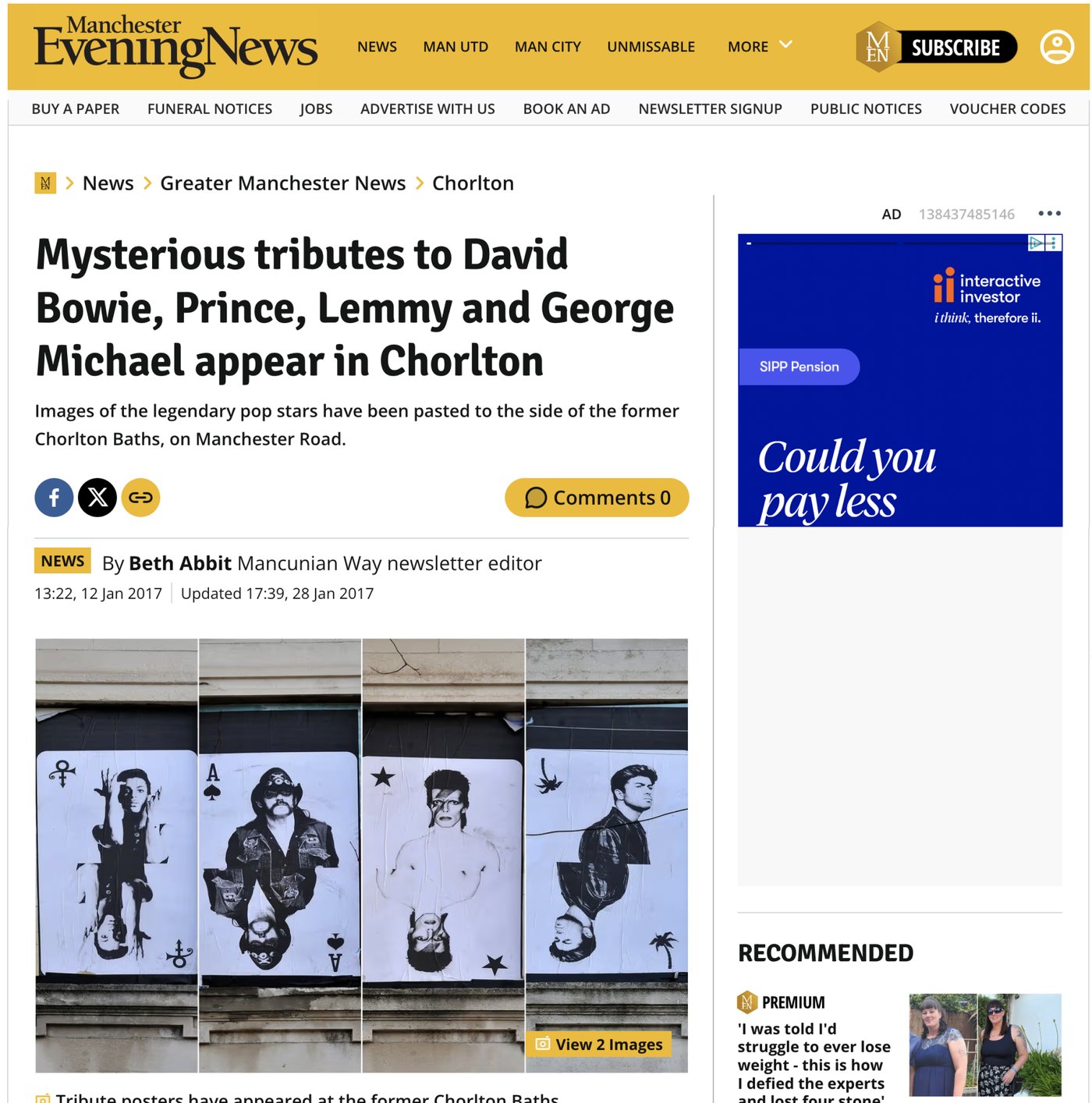
I found four empty swimming-bath windows that naturally framed the four individual tributes.
I placed the pieces directly into the derelict building so its architecture became part of the work.
I photographed the finished installation and captured the public response around it.
The unexpected reaction encouraged me to create further tributes and more community-led street work.
The work was intended to exist outside a gallery and become something people could unexpectedly discover.
The search for the right location in Chorlton led to a derelict swimming baths with four empty windows.
There were exactly four windows and four artists.
The architecture provided a natural frame for each portrait and immediately felt like the right place for the installation.
Four individual posters were created in tribute to David Bowie, Lemmy, Prince and George Michael and installed within those windows.
Two days after installing the work, I discovered that the project had appeared on the front page of the Manchester Evening News.
I had created the work simply as a personal street art tribute, so the response came as a complete surprise.
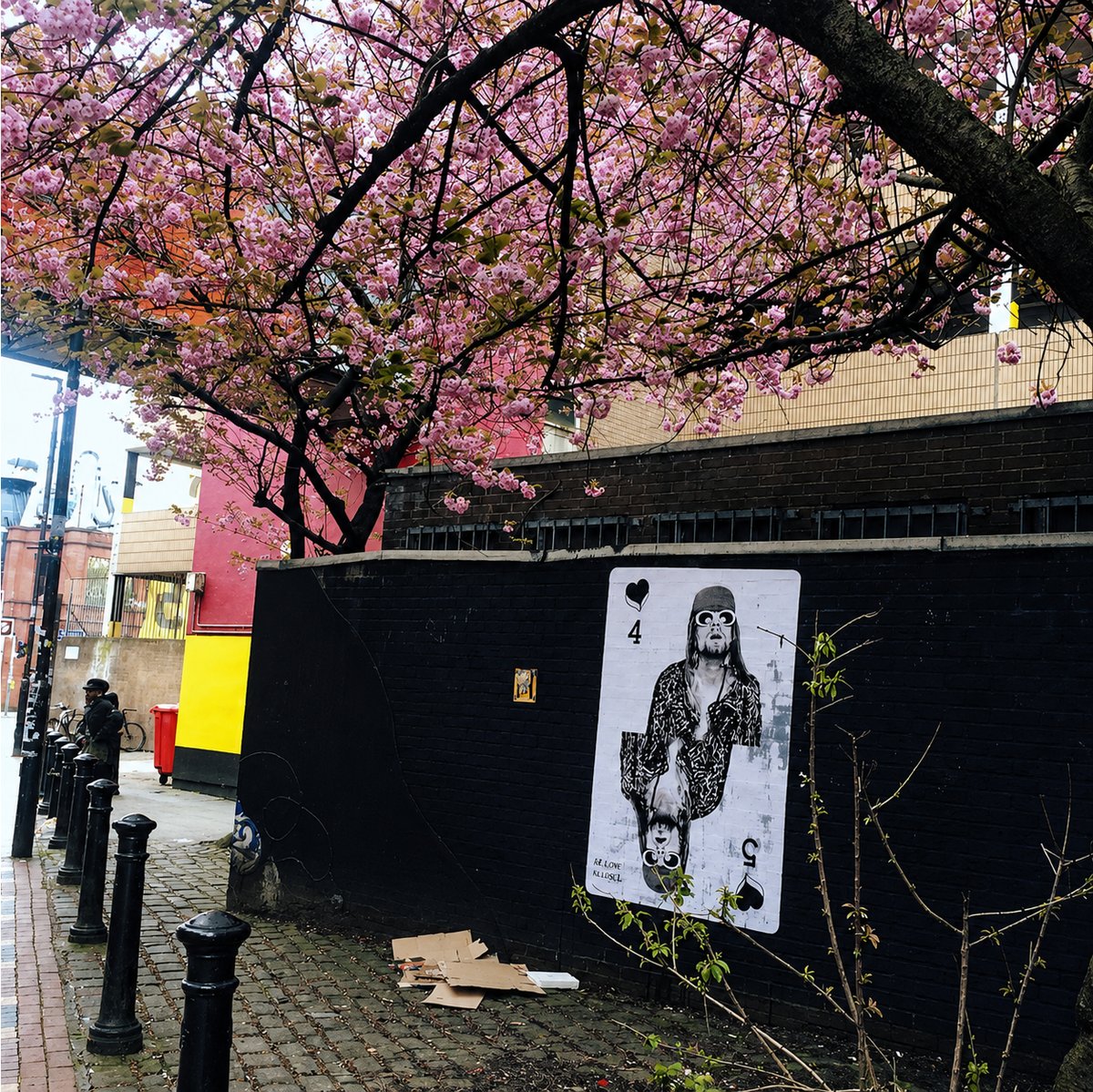
That reaction encouraged me to continue creating street art in tribute to other artists who had died.
More importantly, Love Is Lost gave me the confidence to think about how my street art could become more participatory and community-led.
That thinking eventually led directly to my next project: Wingers.